Desert trekking in Morocco
the story of an unforgettable experience
From Dream to Reality
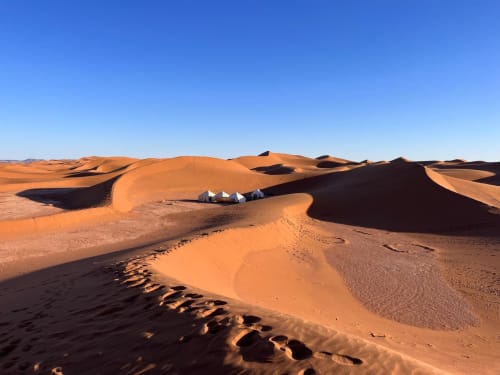
I believe the intention went deeper than that. Like many of us, I grew up reading Tintin Land of Black Gold, and seeing images of camel caravans moving across magnificent dunes at sunset. Those were the images I longed for, along with a desire for physical activity. So it would be walking.
Preparing Properly for a Desert Trek
So I immersed myself in guidebooks and blogs, eager to learn everything before discovering it for myself. Then came the shopping trips, good walking shoes, an extreme cold sleeping bag, water bottle, walking poles, in short, the full survival kit. We were heading somewhere with nothing, so we needed everything, afraid of lacking something, like a civilised human stepping into nature with a credit card never too far away.
I committed myself to physical preparation, walking, yoga, swimming, regaining cardio fitness, flexibility and core strength to cope with five to six hours of walking per day. Not extreme, but when you spend your days sitting at a computer, the contrast can be intense.
The Big Departure for the Desert Trek
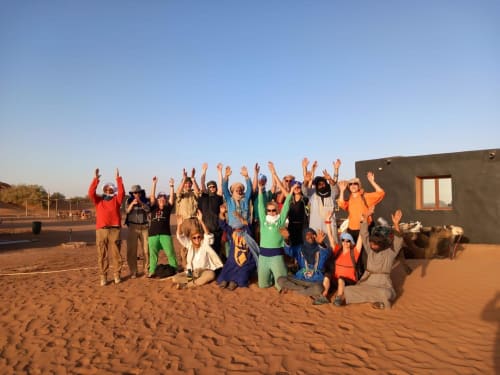
We arrived in the late afternoon. To ease ourselves in, we put on our walking shoes and walked two kilometres into the desert, already far from everything, before reaching our camp for the night, welcomed by the nomads who would be our guardian angels for the week. That was the moment we thought, we are here.
The comfort of riad life was over. We were entering something more demanding and discovering what would become our daily routine for a week.
First Bivouac in the Moroccan Desert
Preparing to Sleep in the Desert
At the end of the meal, everyone took a section of the bench to use as a mattress and headed into their tent. The bravest chose to sleep under the stars, eyes fixed on an incredibly clear sky.
To sum it up, the foam mattress was five centimetres thick, placed directly on the sand, it was five degrees at night, and it was time to prepare for sleep. A simple wash, thermal leggings, socks, jumper, hat, gloves, scarf, and a heavy mountain sleeping bag. Cuddling before sleep was complicated, we wanted the desert, and here we were.
Going to the toilet at night among sleeping camels requires a certain level of agility. Fortunately, we had brought our soft slippers, the only luxury we allowed ourselves. I will not claim it was my best night’s sleep, but it was no worse than being on a boat in strong winds.
- Waking Up After the First Night in the Desert
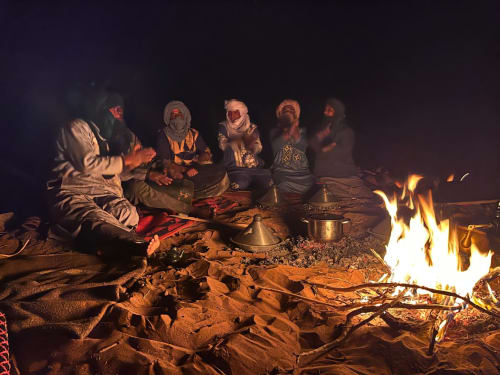
The wake-up was magical, in the middle of nowhere. The nomads were already preparing tea, having revived the embers from the night before, the camels grumbled softly, and the group prepared for the morning yoga session, gloves, socks, hats and down jackets on. Unusual, but we were in the desert, and the sun salutation as the sun appeared behind the dune to greet us was unforgettable.
The camp came alive, the nomads had already dismantled the tents, and prepared a hearty breakfast that had to be eaten quickly. The idea is to walk as much as possible before the heat intensifies. At midday, there is just a fifteen minute energy break, mandarins, dates and water, to reach the next bivouac around three in the afternoon. The nomads need time to set up camp before nightfall and prepare the meal. Our thanks go to them.
The Experience of Walking in the Desert
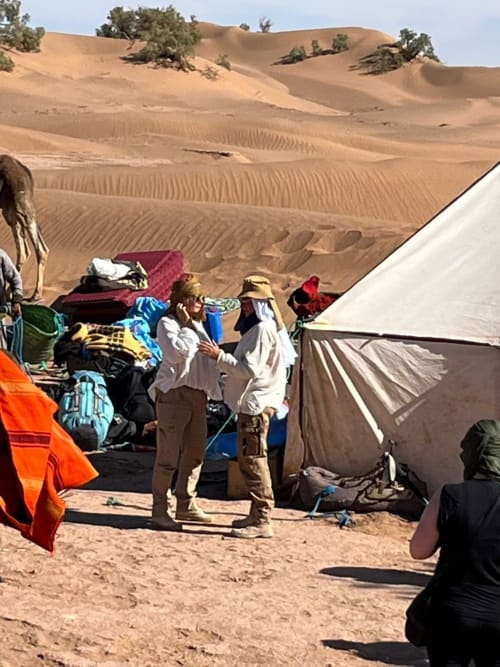
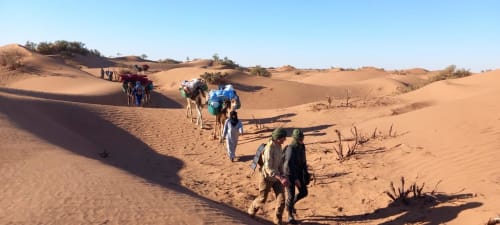
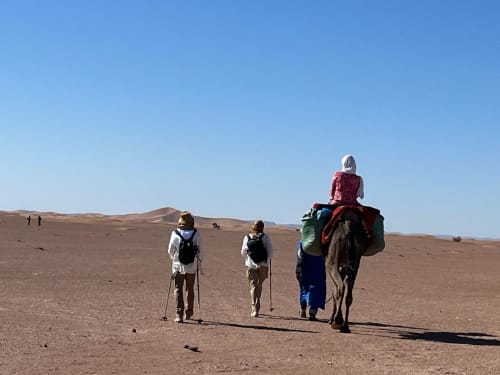
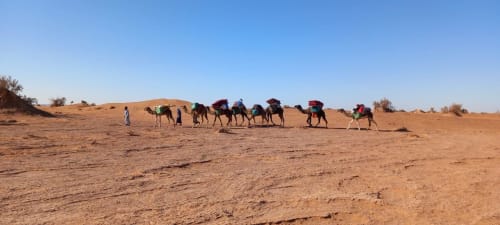
The camels carried the equipment, the nomads walked in sandals, sometimes barefoot, while we wore our latest high tech walking boots. It reminded me of city dwellers arriving on the Breton coast in boots and oilskins while the sun rose over the beach. I felt slightly out of sync with the environment and nomadic atmosphere, but I accepted it, knowing how to welcome the moment.
The landscape is lunar, no life except the occasional shrub, rarely small clusters of bushes. It is harsh and gentle at the same time. Each evening, the nomads made us sleep in small dune amphitheatres, protective cocoons, absolutely beautiful.
A Moment of Deep Emotion
At one point during the walk, halfway through the week, he stopped and asked us to gather. He explained that his ancestors were buried there beneath the sand. He spoke of his nomadic childhood, and we understood that this vast desert, which for us was a tourist experience, once had its inhabitants, its history, its rituals and traditions. Respect, and thank you, Ismail, for sharing this with us.
Finding the Rhythm of a Desert Trek in Morocco
As the days passed, thanks to the positive energy of the group, and despite the language barrier, bonds formed with them. We grew closer, they invited us into their world, in the evenings we sang together, laughed together, a simple life.
Desert Camels, Grumpy but Reliable Companions
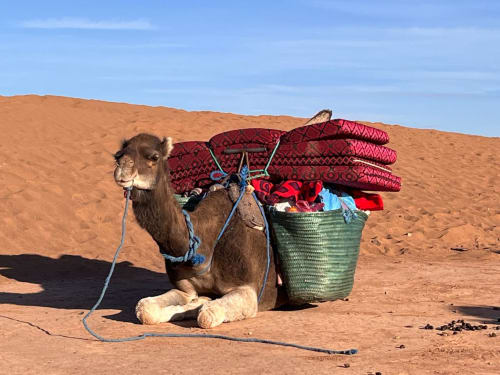
I would not say we formed deep friendships with them, they remain rather rough and sometimes grumpy, but it is thanks to them that we were able to complete this trek in Morocco, and you do grow attached. One day, when I was truly exhausted, a camel became my broom wagon for a few kilometres. I am very grateful to him. I never thought I would fall in love with a camel.
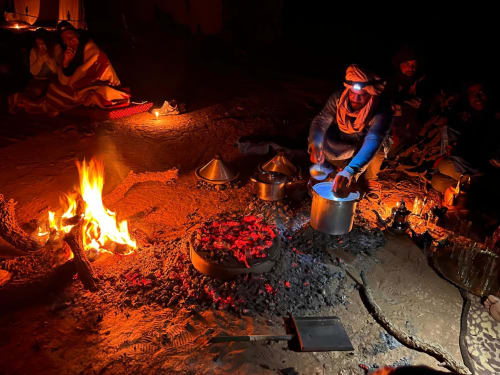
Nomadic Cuisine in the Moroccan Desert, Tagine and Sand Cooking
It was during this trek that I truly understood the meaning of tagine. A tagine is not a recipe, it is a cooking method. The nomads travel with these rounded pyramid shaped dishes, which allow for gentle steam cooking with very little heat. There is not much wood in the desert, so fuel must be carefully managed.
Meals were largely based on vegetables, fruit, eggs and at the beginning meat, all foods that keep well. Nights are very cold, no fridge needed.
- How Nomads Bake Bread in the Desert
Bread is the foundation of Berber food. It serves as a utensil to eat tagine with your fingers. Bread was baked every day, either on an iron plate over the fire, or directly in the sand. The nomads dig a hole, place embers at the bottom, put the dough on the embers and cover it with sand. The bread bakes in a warm envelope and is delicious.
It is a wonderful experience of traditional Berber cooking, and it inspired our culinary approach at Riad Eucalyptus in Essaouira. It is a similar technique to the Berber oven we built at the riad using stone and white clay, where lamb is slow-cooked for several hours.
Returning to Civilisation
We shared a final meal in a Moroccan lounge, where everyone expressed their emotions, then slept in a real bed before leaving early in the morning and returning to civilisation.
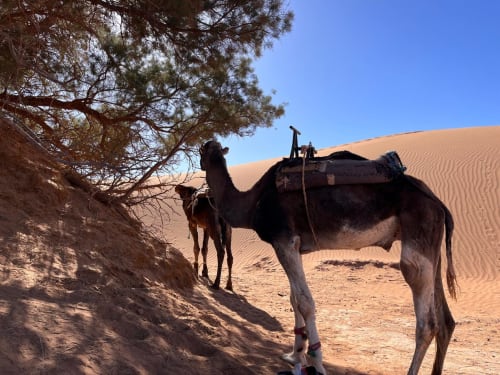
My Desert Trek Experience in Morocco
Yoga in the desert, in the morning it is cold, in the evening I was truly tired, but the environment suits it perfectly, and combining trekking with yoga makes sense.
This trek reminded me of sailing voyages, navigating in challenging conditions, moments when you ask yourself what you are doing there. It is demanding, it brings you back to essentials, nature hits you full on, and everything else disappears. And sharing with the nomads is humanly powerful, a true life lesson.
I will return, for sure. In the meantime, I plan to learn horse riding, I would love to do a multi day ride in the dunes of Essaouira, starting from our Riad Eucalyptus Ethnic Hotel.
Practical Information for Organising a Desert Trek in Morocco
- Type of trip: Moroccan desert trek
- Duration, five to seven days, time is needed to adapt to the slow rhythm and fully immerse, better than a simple desert hike
- Starting point, Essaouira, Marrakech, M’Hamid, last village before the Sahara
- Organisers, local agencies with nomadic guides and cooks, our guide Ismail +212 669-555539
- Accommodation, nomadic tent bivouac with foam mattress, nomadic camp on the final night
- Activities, walking five to six hours per day, yoga, nomadic life, and traditional Berber cooking
- Recommended period, October to April, avoid extreme heat
- Recommended equipment: flexible walking shoes, an extreme cold sleeping bag, warm clothing, a jumper, a hat, gloves, a water bottle, wipes, soft slippers
- Required level, accessible to anyone in good health with some preparation
- Advice: spend six days trekking in the desert, then a few days at Riad Eucalyptus Ethnic Hotel in Essaouira to land gently and rest before heading home
- Option, three-day horse riding raid around Essaouira, starting from Riad Eucalyptus Ethnic Hotel